
Introduction
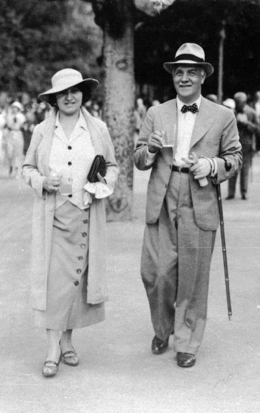
In 2025, 72 years have passed since the death of Professor Jan Czochralski, the originator of the world-famous method for producing single crystals. It is widely believed that without this method and its creator, there would be no semiconductor electronics, modern technology, or engineering today, and our lives would look entirely different. This is no exaggeration, as Czochralski’s discovery, made 109 years ago, was the result of a fortunate coincidence. It was an extremely rare convergence of a young researcher’s quests and expectations, his exceptional observational skills and intuition, and a phenomenon accidentally generated that does not occur in nature. Today, dozens of tons of single crystals grown using the Czochralski method are produced daily worldwide, with the majority utilized by the semiconductor industry. It is hardly surprising, then, that some call Jan Czochralski the “father of electronics.”
His name appears daily in scientific journals in physics and chemistry, either in full or abbreviated to the well-known shorthand: CZ. Although almost no one cites his original works today, his name has entered common usage. Many scholars dream of such recognition. But the Professor did not live to see this popularity. Abandoned in his villa in Kcynia, he was finishing the Polish version of his book Modern Metallurgy, one chapter of which was dedicated to the Czochralski method. He was likely unaware that in the United States, a revolution in electronics had begun precisely through the use of his crystal-growing method, which until then had been applied to the crystallization of metals.
Over time, a surprising “separation” occurred between the name and the person. The entire world began using the Czochralski method with almost no awareness of who its creator was. Only through the persistent efforts of a few individuals over many years was the person and other achievements of Professor Jan Czochralski brought to wider recognition. I hope this text will contribute, even if only partially, to disseminating knowledge about one of the few most famous Polish scientists in the fields of physics and chemistry. Alongside Mikołaj Kopernik and Maria Skłodowska-Curie, perhaps only Jan Czochralski has secured a lasting place not only in the history of these scientific disciplines but also in contemporary scientific terminology. We can be proud that Czochralski, too, is our compatriot!
Jan Czochralski belonged to a generation that actively participated in the tumultuous development of science and technology at the beginning of the 20th century. It suffices to mention the Wright brothers’ first airplane flight (1903), the liquefaction of helium (1908, H. Kamerlingh Onnes), the discoveries of the atomic nucleus (1911, E. Rutherford), superconductivity (1911, H. Kamerlingh Onnes), and X-ray diffraction by crystals (1912, M. von Laue), the atomic model (1914, N. Bohr), the general theory of relativity (1916, A. Einstein), the first transatlantic flight (1919, J. Alcock and A.W. Brown), and the formulation of quantum mechanics (1925, W. Heisenberg).
He was a versatile creator with broad scientific and non-scientific interests, both a technician and a humanist. Even in those times, there were few researchers like him. His rich scientific and technical legacy fully reflects the richness of Czochralski’s life and interests. Moreover, his biography could be divided among several people! Was it merely the nature of the times, or was Czochralski simply an “authentic” son of his era? Let others ponder these questions. There is no doubt, however, that Czochralski combined, almost ideally, hard and diligent work (after all, he came from a family of Greater Poland artisans!), a passion for science and the pursuit of the new, a keen sense for research topics, creative restlessness, and a persistent drive toward his goals despite various setbacks. It is important not to associate his name solely with one discovery or one invention—especially the one he never patented. His legacy still awaits thorough investigation by experts. So far, only the part related to the so-called Czochralski method has been studied in detail, yet his far more numerous achievements in metallurgy and materials science remain. Almost every year brings new insights and sometimes surprising discoveries. For example, it is speculated that the prototype for the Nobel Prize-winning atomic force scanning microscope may have been Czochralski’s so-called radiomicroscope from 1925.
Who, then, was this scholar, deliberately forgotten for many years, who today, 72 years after his death, is placed among the greatest Polish scientists? Why was he misunderstood and consequently forgotten? Why did he experience such a tragedy? What did he truly leave behind in science?
In the family home
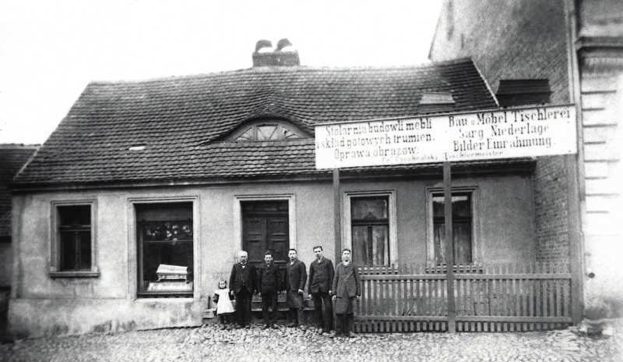
Jan Czochralski was born on October 23, 1885, in Kcynia, in the Pałuki region, then under Prussian partition. He was the eighth of ten children of Franciszek Czochralski and Marta née Suchomska, artisans from Greater Poland. It is no surprise, then, that Jan cherished both diligent work and his homeland.
In accordance with his father’s wishes, he completed the Teachers’ Seminary in Kcynia but, unable to accept his grades, did not collect his matriculation certificate. The lack of this document closed the path to a teaching or academic career. He thus left to continue studying his beloved chemistry on his own. He promised his parents he would return to Kcynia only when he became famous!
In Berlin
At that time, Berlin was the closest academic city, where many Poles studied. Jan Czochralski arrived there at the end of 1904 and began working at Dr. A. Herbrand’s pharmacy/drugstore in Altglienicke (today a district of Berlin). He conducted analyses of ores, oils, lubricants, and metals. Here, he gained experience as a chemist, pharmacist, materials scientist, and scholar, acquiring knowledge and independence in formulating research topics. It is worth noting that he never forgot this pharmaceutical practice; after returning to Poland, he amazed family and friends by preparing excellent liqueurs and dishes, including from plants and mushrooms considered inedible or even poisonous!
Later, he briefly worked at the laboratory of Kunheim & Co. in Niederschöneweide near Berlin before joining the Allgemeine Elektrizitäts-Gesellschaft (AEG) conglomerate. His work at Kabelwerk Oberspree and two years spent in their research laboratories prepared him to become head of the steel and iron research laboratory. He focused on determining the quality and purity of metals, alloys, and semi-finished products, as well as copper refining. His immense diligence and perseverance allowed him, despite lacking formal academic qualifications, to attend lectures on special chemistry at the Charlottenburg Polytechnic near Berlin.
It is said that he also took courses at the Faculty of Arts at the University of Berlin, where he met his future wife, Marguerite Haase, a pianist from a Dutch family settled in Berlin. Around 1910, he received the professional title (or position?) of chemical engineer. From 1911 to 1914, he was an assistant to W. von Moellendorff, with whom he published his first paper on metal crystallography, specifically laying the groundwork for the later theory of dislocations. The young Czochralski’s main task was to introduce aluminum into electronics, pioneering work on the production technology of aluminum sheets, wires, and pressings, studying aluminum alloys, and standardizing metallographic research. Metals and metallography became Czochralski’s passion from then on. He published further papers, tackling difficult and novel topics. His achievements were significant and paved new paths in science and technology. Czochralski’s fame slowly grew.
Discovery of the Czochralski Method
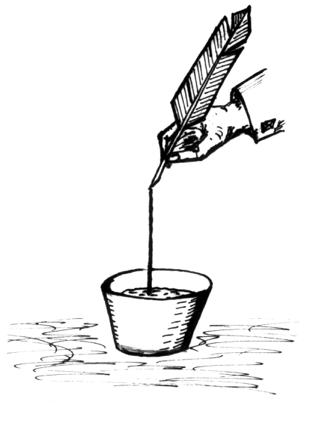
The greatest fame was brought to Jan Czochralski by the method named after him, developed in 1916 as a method for measuring the crystallization rate of metals. Today, the Czochralski method can be described as follows: the material to be crystallized is melted in a crucible and cooled at the surface of the melt to the solidification temperature. A crystallization seed (a capillary or an appropriately oriented single crystal) is introduced into the surface layer of the melt, on which successive crystal layers begin to grow, oriented according to the seed’s orientation. The seed is pulled from the melt at a specific rate to maintain contact between the growing crystal and the melt. The appropriate selection of pulling rate, mutual rotation of the crystal and crucible, temperature distribution in the crucible, and many other parameters affect the size and quality of the resulting single crystal. For example, single silicon crystals used in the semiconductor industry typically have a diameter of about 20 cm. One of the method’s key advantages is the ability to controllably introduce dopants, meaning the material does not need to be “spectrally pure.”
It is worth mentioning that Czochralski also worked on another method for producing single crystals – through recrystallisation of the starting material. He was also the author of the first attempt at a microscopic theory of this phenomenon.
In Frankfurt am Main
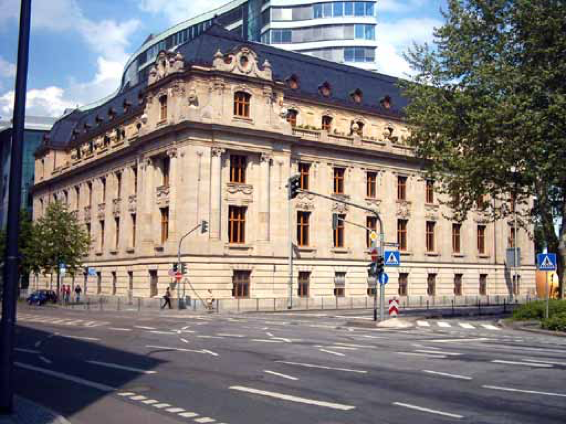
In 1917, Czochralski finally convinced the authorities of the Metallbank und Metallurgische Gesellschaft A.G. conglomerate to establish a large, for its time, metallurgical laboratory combining scientific research with workshop trials. He moved to Frankfurt am Main and, at the age of 32, became the creator and director of one of the best-equipped industrial laboratories in Germany. Many valuable scientific papers and patents were developed there. Among the most notable patented materials was a tin-free bearing alloy for railways, called metal B. The 1924 patent was purchased by the world’s major economic powers, including the USA, France, and England. It brought the inventor a fortune (the last license settlements date from 1948!), but also the envy of others. Efforts to introduce the alloy to Polish railways were perceived as sabotage and weakening of Poland. A series of lawsuits were filed, which, although won by Czochralski, unnecessarily left a negative impression.
The rapidly developing field of metallurgy also gained organizational structure. In 1919, Jan Czochralski, along with a few colleagues, founded the German Society for Metallurgy (Deutsche Gesellschaft für Metallkunde) and became its chairman at the congress in Wrocław in 1925. He did not hide that he was Polish, yet the Germans elected him head of their society! It was noted with appreciation that, while guiding German President Hindenburg through the famous technical exhibition in Berlin in 1924, he spoke to him in Polish. Czochralski was also an honorary member of the International Union for Materials Research in London.
Czochralski’s work was not limited to industrial applications. His fundamental research included pioneering studies on the anisotropy of single crystal hardness, which were significant for the plastic processing of materials (works from 1913–1923). Two manuals, later translated into several languages, were published: Bearing Metals and Their Technological Applications (co-authored with G. Welter, 1920) and Modern Metallurgy in Theory and Practice (1924). However, many of his works were classified as corporate or military secrets (also later in Poland) and were likely never published. It is known that during his time in Frankfurt alone, Czochralski authored reports totaling over 2,000 pages!
Back in Poland
Poland, reborn after World War I, needed the knowledge and skills of its sons scattered around the world. It was known that Jan Czochralski had not forgotten his homeland despite his high position in German industry. He returned to Poland at the invitation of the President, the distinguished chemist Professor Ignacy Mościcki, and in 1929 took up a professorship at the Faculty of Chemistry at the Warsaw University of Technology.
He also received one of the first honorary doctorates from the university. Once again, he built his workshop—the Department of Metallurgy and Materials Science at the university and the Institute of Metallurgy and Materials Science, which worked mainly for the Ministry of Military Affairs. Both scientific institutions were equipped with the most modern apparatus. Professor Czochralski also organized the Metallurgical Section at the Chemical Research Institute (ChIB) in Warsaw, one of the country’s most prominent independent research institutes, established to develop methods for utilizing Poland’s raw material resources for Polish industry. Both modernly equipped institutions also carried out significant defense-related work commissioned by the Ministry of Military Affairs. Czochralski also took over the Institute for Armament Materials Research.
In these institutions, Professor Czochralski continued the research he had begun in Germany. He remained engaged in measuring the crystallization rates of metals, the elastic properties of metals and alloys, and their corrosion in various gaseous atmospheres.
It is worth noting that in May 1939, Professor Walter Gerlach (a renowned physicist, later involved in looting the University of Warsaw’s Physics Institute in 1939) considered Czochralski’s institute better equipped than many German facilities, even though he was shown only the civilian part. In his report, he wrote: “(…) What I saw in this institute is among the most beautiful things I have ever seen, comparable in Germany only to industrial research institutes. It contains every conceivable experimental device and auxiliary means for pure metallurgy, metal chemistry, metal physics, and metal processing. It seems to me primarily a research institute, but teaching is also considered; for these educational purposes, there are first-class auxiliary means and devices. I cannot comment on the institute’s size, but I estimate it is four times larger than Professor Debye’s new institute in Dahlem.” Czochralski was also interested in Poland’s economic development. Several papers from this area have been preserved. A peculiar mystery is an entry in the field of ecology found in the McGraw-Hill Dictionary of Scientific and Technical Terms (p. 408, 3rd ed., 1984). Could ecology have been of interest to him?
He invested the wealth he brought back in Polish industry and allocated it to social causes. Among other things, he supported students, artists, and writers and aided museums. The salons of his home were known as a meeting place for Warsaw’s artistic community. They remained so during the war, taking on new significance by providing support and refuge for artists in particularly difficult situations. It was there, among other things, that a series of sculptures by A. Karny, including portraits of the salon’s host, was commissioned by Czochralski. He actively participated in the activities of the Polish Chemical Society, the Association of Polish Mechanics, and the Association of Polish Metallurgists. Even before the war, attempts were made to portray Jan Czochralski as a usurper of the university chair and an enemy of the Polish state. Press reports from lawsuits won by the Professor, however, indicate a deep sense of connection with the nation and a servile attitude demonstrated in many undertaken actions.
Jan Czochralski also returned to his native Kcynia, where his mother still lived. He thus fulfilled his youthful promise—he was famous and wealthy but did not forget his roots. In Kcynia, he had his second home. He was keenly interested in everything related to his home region, supporting both archaeological research and geological searches for oil deposits.
The Tragedy of War
World War II interrupted the Professor’s scientific work and became a particularly profound experience for him. As a Pole and former prominent Prussian citizen married to a German woman, he faced special pressures from the Germans, who wanted to see him as an intermediary between the occupation authorities and the Poles. Czochralski’s stance was unequivocal—he did not collaborate. Instead, he used his knowledge of Germans differently. As early as the winter of 1939, at the request of his institute’s staff, he organized a service-oriented facility—the Materials Research Department. Created with the knowledge and consent of the then-rector of the dissolved Warsaw University of Technology, Professor K. Drewnowski, this department was likely an experiment. It was an attempt to save university employees, undertaken by someone who could test, without significant risk, whether the Germans would allow work based on specific orders from Polish and German companies (expertise, production of small spare parts). The attempt succeeded, and soon after, on the same principles, several more such departments were established at the university and polytechnic.
The department provided employment and safety (by issuing appropriate documents) to dozens of people in occupied Warsaw, including employees of the polytechnic and ChIB, as well as fictitiously employed members of the Home Army (AK). In addition to regular orders, armament components ordered by the AK were produced, and electrical parts of V-1 and V-2 rockets were destroyed by melting after being studied by Professor Janusz Groszkowski. Not joining the German technical school established by the Germans in 1942 can be seen as an attempt to emphasize Polish identity, a manifestation of not supporting the final liquidation of the Polish polytechnic, and not endorsing German actions in occupied Warsaw. Cooperation with the AK, rescuing people imprisoned by the Germans, aiding the Jewish ghetto in Warsaw, saving destroyed museum collections, supporting Polish writers and artists, and salvaging the polytechnic’s assets after the Warsaw Uprising—all these were natural aspects of Czochralski’s wartime activities. He considered it his duty as a Pole to use his exceptional knowledge of German psychology and language for the Polish cause, despite the risk of appearing to collaborate with the occupiers. And indeed, during the war, the AK counterintelligence investigated reports against Czochralski, but no significant reprisals were taken against the Professor (and there could have been only one—death!). In April 1945, the Professor was arrested on serious charges of “collaboration with the German occupation authorities to the detriment of civilians or the Polish state.” The investigation conducted by the Special Criminal Court in Łódź determined that there was no basis for prosecuting Czochralski or his family. As the prosecutor later wrote: “Czochralski’s activities during the occupation in no way constituted collaboration with the occupier and could not be classified as treason against the Polish nation.” In August 1945, the investigation was discontinued for lack of evidence of guilt.
Epilogue
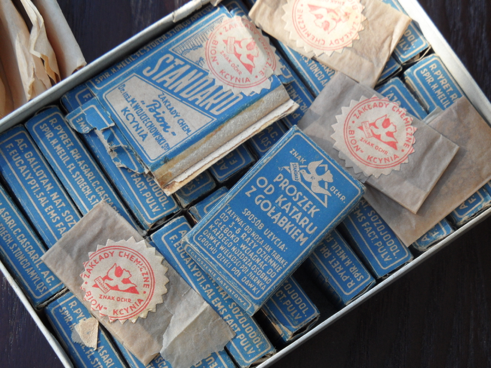
Embittered, Professor Czochralski returned to his native Kcynia. He did not accept an offer to move to Austria, just as he had once rejected an offer from Ford, choosing to return to his homeland. He knew his place was in Poland. Now, together with his family, he founded the BION Chemical Works, producing various cosmetics and drugstore products, including the famous “sneezing powder with a Dove.” Thus, the circle of his life closed: Kcynia – Berlin – Frankfurt am Main – Warsaw – Kcynia. Jan Czochralski returned to Kcynia and to pharmaceutical-drugstore chemistry.
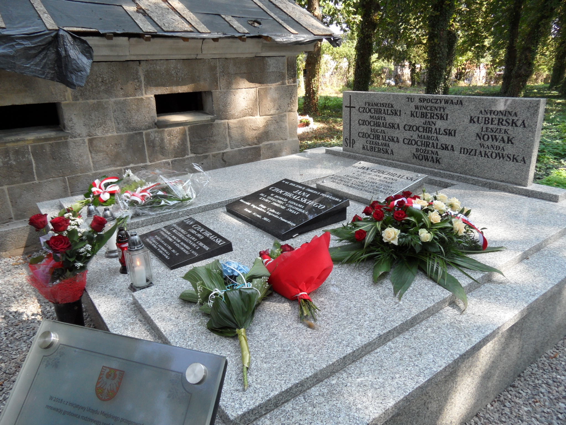
The Professor died of heart disease in Poznań on April 22, 1953, and was buried in the old cemetery in his native Kcynia. Professor Jan Czochralski was undoubtedly a colorful yet tragic figure. Various accounts paint a picture full of contradictions. An outstanding scholar, observer, and practitioner in the fields of exact and technical sciences. At the same time, a humanist with broad interests. He wrote scientific papers and poetry. He supported factories and young artists. He funded scholarships for students in Germany and Poland. Widely known before the war and forgotten after it. For some, he was cold and disliked (because he was demanding and reserved); others admired his charming smile and trust in humanity. He knew his worth, achieved through hard work, and did not allow himself to be ridiculed or belittled. He recognized the immense role of culture in the life of a nation and individual, which is why he engaged in art patronage. His daughter wrote beautifully about him:
“Homeland above all—this was Father’s guiding thought. He thought of it, worked for it, gained fame for it, and suffered so much for it.”
But recognizing his discoveries as an integral part of Polish heritage required time and arduous efforts both in Poland and abroad.


